
District Overview
Medak district is located in the northern part of Telangana, India. Medak town serves as its administrative headquarters. The present district shares boundaries with Sangareddy, Kamareddy, Siddipet and Medchal-Malkajgiri districts, according to the district administration.
The district is known for Medak Fort, Medak Cathedral, Edupayala Vana Durga Bhavani Temple, Pocharam Reservoir and Wildlife Sanctuary. Its cultural landscape also includes historic temples, mosques, archaeological remains and settlements associated with different periods of Deccan history.
The name Methuku is associated with the area's rice-growing traditions in regional historical accounts. The older name Methukudurgam is associated with Medak Fort. Historical references to Medak, Siddapuram and Gulshanabad should be read in their respective historical contexts rather than treated as interchangeable names for the present district.
Headquarters: Medak town | Population: 767,428 (2011 Census) | Administrative divisions: 3 revenue divisions and 20 mandals
Discover Medak – Forts, Faith and Archaeological Heritage
Medak district offers a cross-section of Telangana's historical and cultural landscape. The hilltop fort reflects the region's medieval political history, while Medak Cathedral is a landmark of twentieth-century Gothic Revival architecture. Edupayala is associated with a traditional pilgrimage landscape around the Manjeera River, and Pocharam combines a reservoir with protected wildlife habitat. Archaeological findings reported from places such as Edithanur and Wargal point to prehistoric and megalithic activity in the broader region.
Top Attractions in Medak District
Historic Landmarks

Medak Fort (Methukudurgam)
A hill fort associated with the Kakatiya period and later Qutb Shahi rule. Its surviving gateways, defensive walls and other structures reflect successive phases of Deccan history.
Medak Cathedral
A landmark Church of South India cathedral known for its Gothic Revival design and stained-glass windows. The present cathedral was consecrated on 25 December 1924.
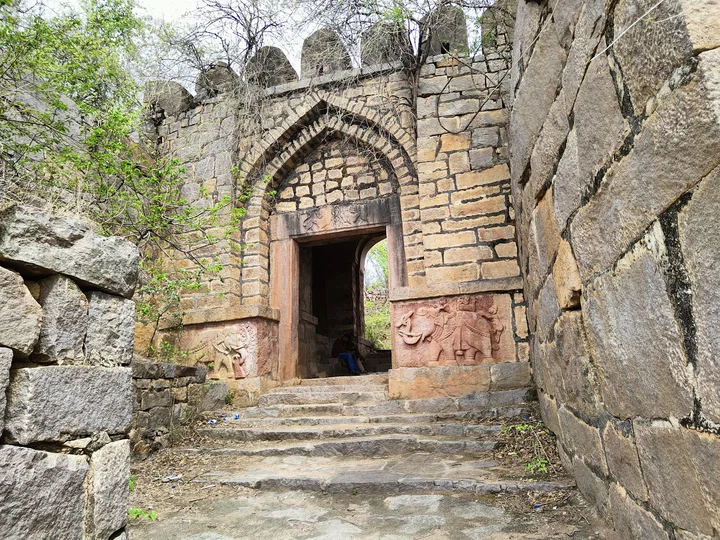
Medak's Medieval Heritage
Explore the fort's gateways, masonry and defensive setting through the district's surviving historic structures and documented architectural features.
Temples

Edupayala Vana Durga Bhavani Temple
A major pilgrimage destination in Papannapet mandal, traditionally associated with seven streams joining the Manjeera River and the annual Edupayala Jatara around Shivaratri.

Kuchadri Venkateshwara Swamy Temple
A historic hillock temple at Kuchanpalli, associated with Venkateswara worship. Telangana Tourism places surviving architectural and sculptural features broadly in the sixteenth to seventeenth centuries.
Nature, Reservoirs and Wildlife

Pocharam Wildlife Sanctuary
A protected wildlife area associated with Pocharam Reservoir. The sanctuary supports a range of mammals and birdlife; sightings vary with season and conditions.

Pocharam Forest and Wildlife
Woodland, scrub, reservoir margins and associated habitats support local wildlife. Visitors should follow sanctuary regulations and avoid disturbing animals.

Narsapur Forest Landscape
A forested landscape in the Narsapur area. Check local access conditions before visiting and do not assume that all forest areas have developed tourist facilities.
History and Archaeological Heritage
Early settlement: Archaeological reports from localities including Edithanur and Wargal refer to prehistoric and megalithic cultural evidence, including rock paintings. Individual discoveries require site-specific dating and archaeological context.
Satavahana-period evidence: Telangana Tourism describes archaeological discoveries at Kondapur, including coins associated with Satavahana rulers. The finds provide evidence of ancient settlement and exchange in the wider region; individual objects should be interpreted using archaeological records.
Kakatiya period: Medak Fort is traditionally and officially associated with the Kakatiya rulers. The district administration identifies the fort with the twelfth-century period and the reign of Pratapa Rudra. Its surviving fabric also reflects later use and modification.
Qutb Shahi period: The fort was subsequently used and developed under the Qutb Shahi rulers. The fort complex and historic mosque at Komtoor are examples of the region's later Deccan architectural history.
Colonial-era architecture: Medak Cathedral was consecrated on 25 December 1924. Its construction history is associated with Reverend Charles Walker Posnett, the local Christian community and the Gothic Revival architectural tradition.
Modern district: The boundaries and administrative structure of Medak have changed during Telangana's district reorganisations. Historical descriptions of the former undivided Medak district should not automatically be applied to the present district.
Culture and Festivals
Edupayala Jatara: The annual festival at Edupayala Vana Durga Bhavani Temple is associated with Shivaratri and draws pilgrims from Telangana and neighbouring states. Dates and crowd arrangements vary each year.
Bathukamma: Telangana's floral festival is observed across the state, including Medak, with seasonal flowers, songs and community gatherings.
Bonalu: Goddess-centred festival traditions are observed in parts of Telangana. Dates and local practices differ between temples and communities.
Religious diversity: The district's temples, cathedral, mosques and other religious sites reflect the presence of different faith traditions and historical communities.
Local traditions: Village festivals, fairs and seasonal gatherings remain part of the district's cultural life. Specific ritual histories and origin stories should be attributed to local tradition unless supported by documentary evidence.
Travel Guide
How to Reach Medak
By Road: Medak town is approximately 95–100 km from Hyderabad, depending on the route and starting point. Road connections and bus services link Medak with Hyderabad and nearby district headquarters. Check current bus schedules before departure.
By Rail: Medak town does not have a railway station. Akkannapet and Kamareddy are among the railheads identified in government tourism information. Check current train services and onward road connections before travelling.
By Air: Rajiv Gandhi International Airport in Hyderabad is the principal airport for visitors arriving by air. Continue to Medak by road.
Best Time to Visit
October to February is generally more comfortable for exploring the fort, cathedral, temples and outdoor sites. Monsoon conditions can change reservoir levels and make uneven paths slippery. Summers can be hot.
Safety and Visitor Tips
- Carry drinking water, especially during warmer months.
- Medak Fort has a substantial climb and uneven stone surfaces. Wear suitable footwear.
- Observe visitor instructions at the cathedral, temples and other places of worship.
- Stay away from reservoir edges and flowing water during unsafe conditions.
- Check access arrangements before visiting wildlife and forest areas.
- Confirm festival dates, traffic arrangements and local transport before travelling during the Edupayala Jatara.
- Do not assume that boating, accommodation, food outlets or other facilities are operating without current confirmation.
Where to Stay
- Medak town: A practical base for the fort, cathedral and nearby attractions. Confirm accommodation availability in advance.
- Narsapur and surrounding towns: Check locally for accommodation and transport options if visiting forest areas.
- Hyderabad: A possible base for a day trip, subject to travel time and the number of attractions planned.
Suggested Itineraries
One-Day Medak Heritage Trip
- Morning: Visit Medak Cathedral and allow time to appreciate its architecture and stained-glass windows.
- Late morning: Explore Medak Fort, allowing extra time for the climb and uneven terrain.
- Afternoon: Travel to Edupayala Temple if travel time, opening arrangements and the day's schedule permit.
- Evening: Return toward Medak or Hyderabad.
This itinerary may be too ambitious during festival periods or if visitors want to explore each site in detail. Confirm current access and travel times before departure.
Two-Day Medak and Nature Trip
- Day 1: Visit Medak Cathedral, Medak Fort and other accessible historic sites in and around Medak town.
- Day 2: Visit Edupayala Temple and, if conditions and time permit, Pocharam Reservoir and Wildlife Sanctuary.
Pocharam and Edupayala should be planned according to actual road distances, current access rules and available daylight. Do not assume that all attractions can be covered comfortably in a single day.
Mandals of Medak District
The district administration lists 3 revenue divisions and 20 revenue mandals: Medak, Narsapur and Toopran. The following grouping follows the mandal listings published by the district administration.
Medak Revenue Division – 10 Mandals
Narsapur Revenue Division – 5 Mandals
Toopran Revenue Division – 5 Mandals
Administrative listings can change. Consult the official Medak district website for the latest division and mandal assignments.
Administration
District headquarters: Medak town.
Revenue divisions: Medak, Narsapur and Toopran.
Revenue mandals: 20, according to the district administration's published mandal listing.
Neighbouring districts: Sangareddy, Kamareddy, Siddipet and Medchal-Malkajgiri, according to the current district profile.
Population: 767,428 according to the 2011 Census figures published by the district administration.
]: Government pages show differing geographical-area figures of approximately 2,741–2,757 km². The district's tourism profile lists 2,740.89 km²; the at-a-glance page lists 2,757.37 km². The figures should not be presented as identical.
Key Towns and Local Centres
Medak: District headquarters and location of Medak Fort and Medak Cathedral.
Narsapur: A major town in the district and a gateway to the Narsapur forest landscape.
Toopran: A town serving as the headquarters of a revenue division.
Ramayampet: A mandal headquarters in Medak Revenue Division.
Papannapet: A mandal associated with the Edupayala pilgrimage area.
Tekmal: A settlement with documented Kakatiya-period historical associations.
Kuchanpalli: Associated with the Kuchadri Venkateshwara Swamy Temple.
Economy and Industries
Agriculture: Agriculture is an important part of the rural economy. Rice cultivation is particularly relevant to the historical association of the name Methuku with the region.
Industrial development: Medak and the surrounding region form part of Telangana's wider industrial and transport network. Industrial activity varies by locality and should be assessed using current government and industrial-estate records.
Trade and services: Medak town serves as the district's administrative and commercial centre. Towns and mandal headquarters support local trade, public services and agricultural activity.
Tourism and heritage: Medak Fort, Medak Cathedral, Edupayala and Pocharam are among the district's principal visitor destinations. Their economic contribution depends on access, conservation, transport and the availability of visitor services.
For current industrial-unit lists, investment data and employment figures, consult official Telangana Industries Department publications rather than relying on outdated company lists.
Natural Resources and Geography
Manjeera River: The Manjeera is an important river in the wider region and is associated with the Edupayala pilgrimage landscape and several water-resource projects in Telangana.
Pocharam Reservoir: The reservoir was formed by a dam across the Allair River constructed between 1916 and 1922. It is associated with the neighbouring wildlife sanctuary and its wetland and woodland habitats.
Forests and wildlife: The Narsapur forest landscape and Pocharam Wildlife Sanctuary provide examples of the region's woodland and wildlife habitats. Sightings of individual species cannot be guaranteed.
Archaeological landscapes: Rock paintings and megalithic remains reported from sites including Edithanur and Wargal contribute to understanding early human activity in the region.
Water and conservation: Visitors should follow local restrictions around reservoirs, forest areas and wildlife habitats. Water levels, access and facilities may vary by season.
Frequently Asked Questions
What is Medak district famous for?
Medak is known for its historic hill fort, Medak Cathedral, Edupayala Vana Durga Bhavani Temple, Pocharam Reservoir and Wildlife Sanctuary, and archaeological heritage.
How many mandals are in Medak district?
The district administration lists 20 revenue mandals across 3 revenue divisions: Medak, Narsapur and Toopran.
What is the population of Medak district?
The district's population was 767,428 according to the 2011 Census figures published by the district administration.
When was Medak Cathedral consecrated?
Medak Cathedral was consecrated on 25 December 1924. It is known for its Gothic Revival architecture and three principal stained-glass windows.
What is Medak Fort's historical name?
The fort is commonly referred to as Methukudurgam. Government tourism material associates its early construction with the Kakatiya period and later development with the Qutb Shahi rulers.
What is Edupayala Temple known for?
Edupayala Vana Durga Bhavani Temple is associated with the traditional meeting of seven streams with the Manjeera River and the annual Edupayala Jatara around Shivaratri.
Is Pocharam a wildlife sanctuary or a reservoir?
Both names are used for related but distinct features: Pocharam Reservoir is the water body, while Pocharam Wildlife Sanctuary is the protected wildlife area surrounding it.
What is the best time to visit Medak?
October to February is generally more comfortable for outdoor sightseeing. Visitors should check current access conditions, especially during the monsoon and major festival periods.
Explore Medak
Browse Telangana360 articles covering Medak's forts, temples, churches, archaeological sites, wildlife and local history.
Medak – A District of Layered Heritage
Medak district brings together medieval fort architecture, religious landmarks, archaeological evidence, rural traditions and natural landscapes. Medak Fort and the cathedral represent different historical periods, while Edupayala and Pocharam connect pilgrimage, water and the natural environment.
Exploring the district through individual site histories helps distinguish documented archaeological evidence from traditional accounts and later interpretations. Visitors should verify current access and facilities before travelling.
- Headquarters: Medak town
- Revenue divisions: Medak, Narsapur and Toopran
- Mandals: 20
- Population: 767,428 (2011 Census)
- Historic fort: Medak Fort, also known as Methukudurgam
- Religious landmark: Medak Cathedral, consecrated in 1924
- Pilgrimage centre: Edupayala Vana Durga Bhavani Temple
- Wildlife and water: Pocharam Reservoir and Wildlife Sanctuary
- Archaeology: Prehistoric and megalithic evidence reported from localities including Edithanur and Wargal
Explore Telangana
Discover more districts, temples, forts, waterfalls, archaeological sites and cultural heritage across Telangana.
References
- Government of Telangana – Medak District: District profile and administrative information.
- Medak District – At a Glance: Demographic and administrative data.
- Medak District – Mandals: Revenue mandal listings.
- Medak District – Tourism: District tourism profile.
- Medak District – Tourist Places: Official attraction listings.
- Telangana Tourism – Medak: Historical and architectural background.
- Telangana360 – Medak Articles: Individual destination guides and local historical research.
Administrative figures and historical descriptions should be read in their source context. Government pages contain differing geographical-area totals. Historical associations, local traditions and archaeological interpretations should not be treated as equivalent forms of evidence.
Comments
Post a Comment